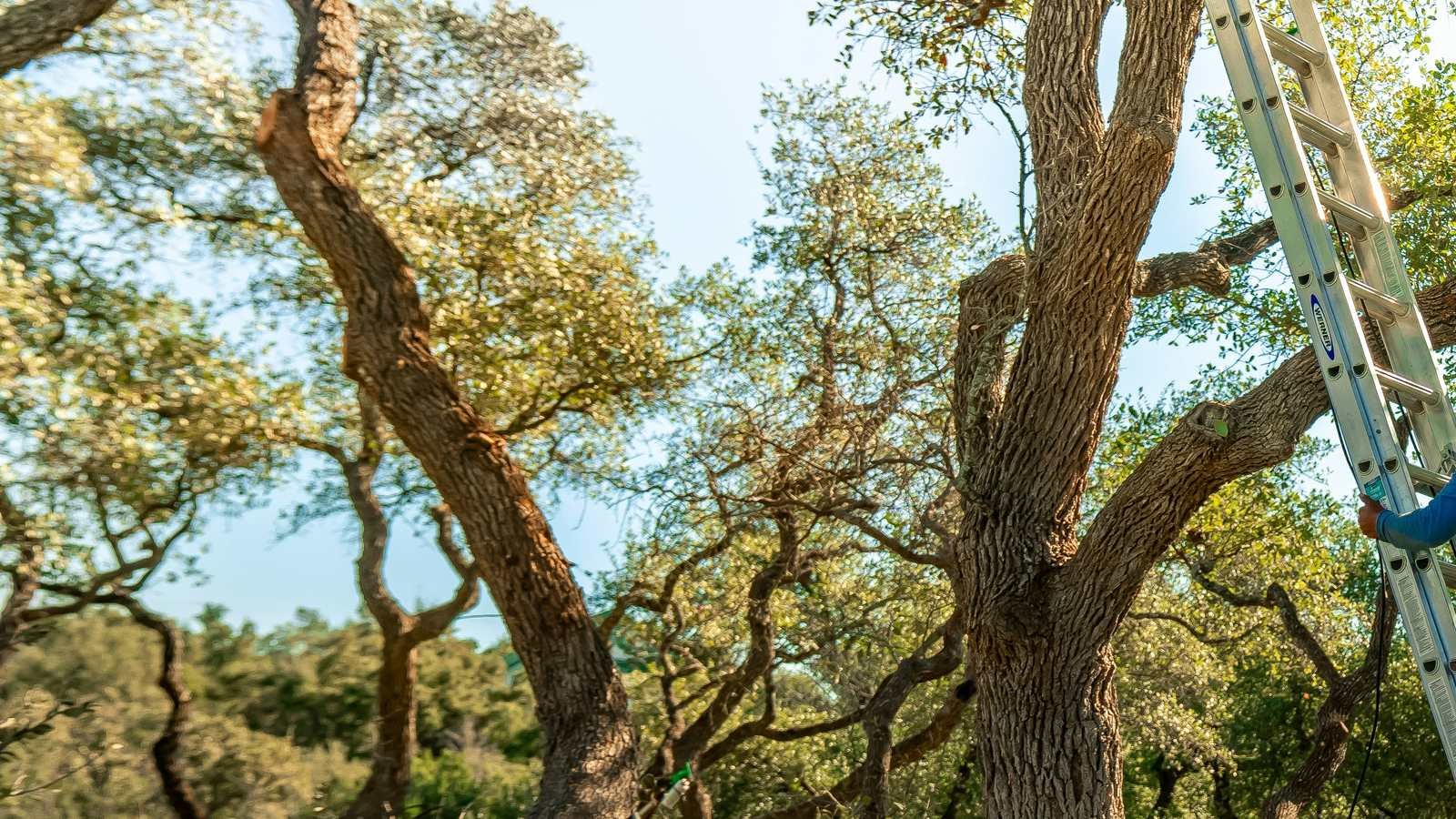
Oak Tree Trimming & Care in Temecula Valley, CA
Careful pruning and health care for coast live oaks, Engelmann oaks and valley oaks — timed for the dry season, permit-aware and never over-pruned.
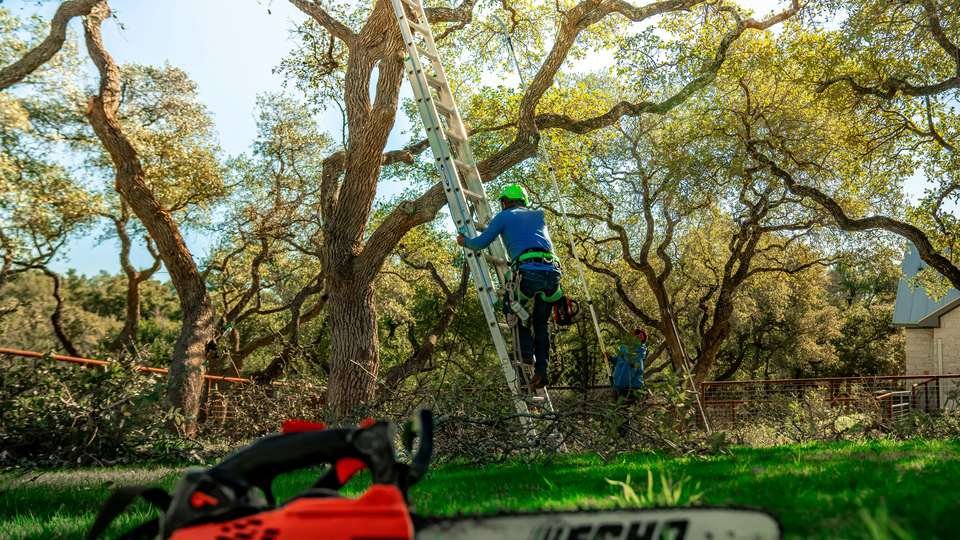
Why Oaks Need Specialist Care
Native oaks are among the most valuable — and most protected — trees in Southern California. They support hundreds of species of wildlife, they take centuries to mature, and they are very sensitive to how they are treated. Heavy pruning, soil compaction, grading and summer irrigation near the trunk can all shorten an oak's life, sometimes years after the damage is done.
The oaks we see in the Temecula Valley are mainly coast live oak (Quercus agrifolia), Engelmann oak (Quercus engelmannii), valley oak (Quercus lobata) and scrub oak. Some are 200 years old.
How Oaks Are Protected
Many jurisdictions protect native oaks above a certain trunk size. The City of Temecula, for example, protects native oaks with trunks 12 inches or wider (measured 4.5 feet above grade) under Municipal Code Chapter 8.48, requires a permit for removal or disturbance of the protected zone, and treats each damaging action as a separate violation. Other cities and the county have their own rules. We check before any cut. See our permit guide.
What Good Oak Pruning Looks Like
- Light and conservative: removing deadwood, hazardous limbs and crossing branches, not thinning the crown heavily
- Cuts made at the branch collar, never flush, never stubs
- Timing in the dry months, away from wet weather that spreads fungal spores and away from bird nesting
- Equipment kept off the root zone, no soil disturbance under the canopy
- A plan for the tree: watering (or not), mulch and monitoring
The Summer-Water Problem
Native oaks are adapted to dry summers. Regular irrigation close to the trunk — especially lawn sprinklers — can promote root and crown diseases. We advise on safe watering: none near the trunk, deep and infrequent if the tree is stressed, and mulch beyond the trunk flare rather than against it.
Oak Health Issues
| Issue | Sign | Note |
|---|---|---|
| Root and crown disease | Sudden decline, oozing at the base | Often linked to summer irrigation or soil changes |
| Shot hole borer | Entry holes, sap, dieback in coast live oak | Confirm and manage; see our shot hole borer guide |
| Drought stress | Thinning canopy, leaf scorch | Assessment before pruning |
| Structural defects | Heavy lateral limbs, included bark | Selective reduction or cabling |
Oak Tree Trimming Cost
Typical Temecula Valley oak pruning runs about $450–$2,300 per tree, depending on size, access and permit needs. Assessments and permit support are quoted separately when needed.
Oaks and Construction
If you are building, grading or trenching near an oak, get an arborist plan first. Fence the root zone, keep heavy equipment out from under the canopy and avoid changing the soil level around the trunk. We can provide protection guidance and reports.
Understanding an Oak's Root Zone
The most important part of an oak is the part you cannot see. Roots extend far beyond the dripline, most within the top two feet of soil, and they live in partnership with soil fungi that depend on dry summers. Anything that compacts, cuts, covers or waters this zone — trenching for a utility, grading, paving, irrigation — can harm the tree, sometimes years later.
| Activity in the root zone | Risk to the oak | Safer approach |
|---|---|---|
| Trenching for utilities or irrigation | Severs roots and opens infection paths | Route lines outside the dripline or bore under roots |
| Grading or adding soil | Suffocates roots; raises crown-level moisture | Do not change grade under the canopy |
| Paving or patios | Blocks air and water | Use permeable materials and keep outside the dripline |
| Lawn sprinklers | Encourages root and crown disease | Keep irrigation beyond the dripline |
| Heavy equipment | Compacts soil | Fence the protection zone |
Oak Species Around Riverside County
| Oak | Where you find it | Notes |
|---|---|---|
| Coast live oak (Quercus agrifolia) | Foothills, canyons and valleys throughout the county | Evergreen; common landscape and native tree; susceptible to shot hole borer |
| Engelmann oak (Quercus engelmannii) | Southwestern Riverside County and San Diego County | Semi-evergreen; restricted range and declining; especially valuable |
| Valley oak (Quercus lobata) | Deeper soils in valleys | Deciduous; large and long-lived |
| Scrub oak (Quercus berberidifolia) | Chaparral and foothill slopes | Shrubby; fire-adapted |
How Much Can Be Pruned From an Oak?
| Type of pruning | Typical amount removed | Comment |
|---|---|---|
| Deadwood cleaning | Any dead wood, live crown untouched | Safe and beneficial |
| Hazard reduction | Only the limbs posing risk | Targeted, not across the canopy |
| Clearance | Selective lifting or end reduction | Minimal live-crown loss |
| Thinning | Light, less than about 10–15% of live foliage | Oaks are sensitive to heavy thinning |
Signs of Oak Decline
- Thinning canopy and dieback in the upper crown
- Sap oozing from the trunk or base, or dark staining
- Small entry holes or frass indicating borers
- Fungal fruiting bodies at the base
- Sudden leaf browning during summer
- Poor acorn production and unusual leaf drop
Protecting an Oak During Construction
- Have an arborist define the protected zone before plans are finalized.
- Install sturdy fencing around the protected zone before equipment arrives.
- Prohibit storage, parking and trenching inside the fence.
- Use hand tools or air excavation for any work near major roots.
- Keep a written monitoring log and adjust watering only under arborist advice.
Replanting and Replacement Trees
When a permit requires replacement, or you are simply restoring a landscape, use locally adapted acorns or container stock, plant in fall, protect from animals and provide temporary irrigation only until roots establish. Native oaks grow slowly, so patience and the right site are more important than size.
Permit Steps Recap
- Identify the oak and measure the trunk 4.5 feet above grade.
- Check your city or county rules and any protected-zone requirements.
- Get an arborist report if required.
- Apply for the permit before any pruning beyond routine deadwood removal.
- Follow conditions, including replacement planting and inspections.
Oak tree trimming Across the Temecula Valley
Shai's Tree Service provides oak tree trimming throughout the Temecula Valley — Temecula, Murrieta, Wildomar, Lake Elsinore, Menifee, Canyon Lake, French Valley and Winchester — from our yard on Calle Ventura. Each part of the valley has its own trees, wind exposure, fire rules and permit requirements, so our crews plan every job around local conditions rather than a one-size checklist. If you are searching for oak tree trimming near me anywhere in the Temecula Valley, call us or send the form for a free written estimate. Choose your city below for local details.
Oak Tree Trimming & Care: Common Questions
Are oak trees protected?
In many Temecula Valley jurisdictions, yes — often above a trunk-size threshold. We check requirements before any cut.
When should oaks be pruned?
Generally in the dry months, in small amounts, avoiding wet weather and nesting periods.
How much can be pruned from an oak?
Keep it light — well under a quarter of the canopy in a visit.
Should I water my oak in summer?
Not near the trunk. Native oaks are adapted to dry summers; extra irrigation can cause root disease.
Can oaks get shot hole borer?
Coast live oaks can host shot hole borer. We check for it during assessments.
Can you remove an oak?
With a permit where required. We prepare details and explain replacement rules.
Can you help with a permit?
Yes. We tell you what is needed and prepare the information.
What does it cost?
Typically $450–$2,300 per oak.
Oak Tree Trimming & Care by City in the Temecula Valley
Pick your city for local pricing notes, permit and HOA information and neighborhoods we serve. Every valley city listed has its own page.
Ready for a safer, healthier yard?
Tell us about your trees and get a free written estimate anywhere in the Temecula Valley — usually within one business day.