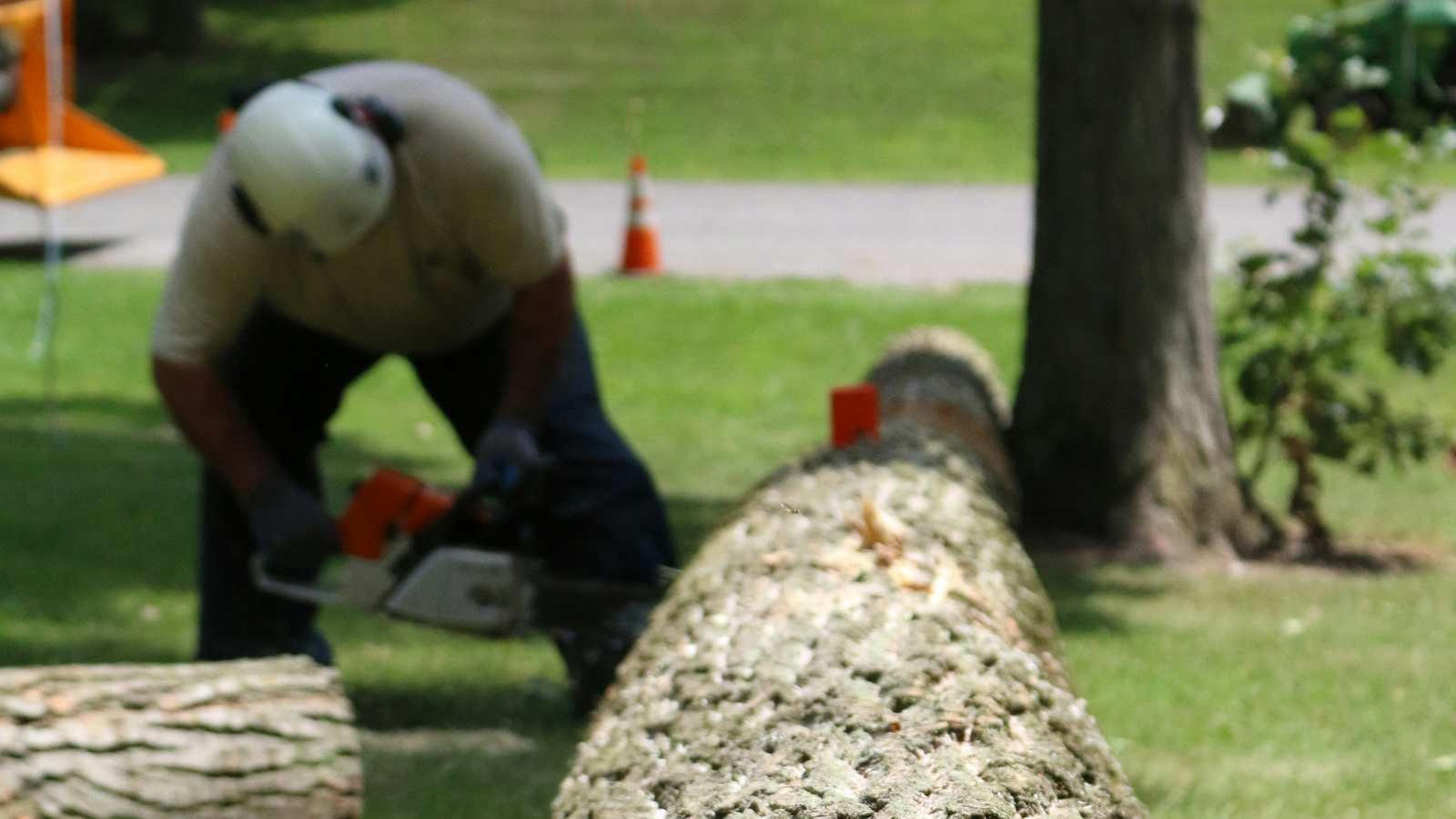
Tree Removal in Temecula Valley, CA
Safe removal of dead, leaning, diseased or unwanted trees — sectional rigging over homes, fences and pools, with full cleanup and haul-away.
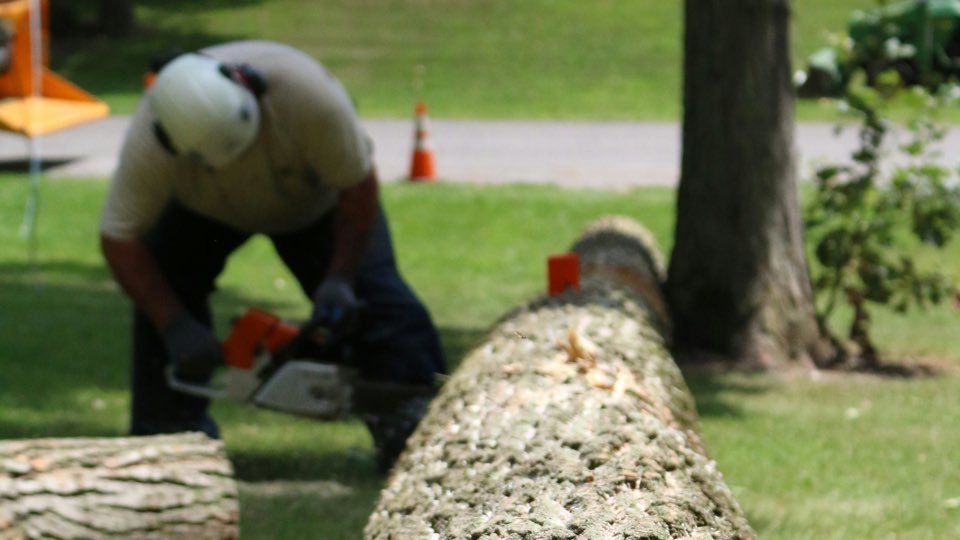
When Tree Removal Is the Right Call
Removal is the last option, not the first. A good tree company tells you honestly when pruning, cabling or treatment can save a tree — and when it cannot. A tree usually needs to come out when it is dead, structurally failing, seriously diseased, damaging a structure or utility, or simply in the wrong place.
- The tree is dead, hollow or shedding large sections of bark
- A lean that has recently changed, or soil heaving and cracking at the base
- Large cracks, splits or included bark in the trunk
- Fungal conks or mushrooms at the base or on the trunk
- Major limbs dying back from the top of the crown
- Roots lifting a driveway, foundation, pool deck or sewer line
- Storm damage that removed a large share of the crown
- An infestation, such as shot hole borer, that has compromised structure
How We Remove Trees Safely
Removal is a rigging problem before it is a cutting problem. What is under and around the tree decides the method. Where there is a clear drop zone, a tree can sometimes be felled whole. Everywhere else — over roofs, fences, pools, patios, and next to neighboring homes — we take it down in sections, lowering each piece on ropes.
- Assess the tree and the siteWe look at the trunk, roots, canopy and everything around it, and we explain the risk and the plan in plain language.
- Confirm permits and accessWe check whether your city, HOA or the county requires approval and plan the route for equipment and debris.
- Rig and protectRopes, blocks and protection go up first. Anything that must not be hit gets a plan.
- Take it down in controlled sectionsClimbers work from the top down; the ground crew controls the lines and clears each piece as it comes down.
- Haul away and finishWood and brush are chipped or hauled, the area is raked and blown clean, and stump grinding can be added in the same visit.
Tree Removal Cost in the Temecula Valley
Prices below are typical Southern California ranges. They are not a quote — the only way to price a removal accurately is to see the tree and its surroundings.
| Tree size / situation | Typical range | Why |
|---|---|---|
| Small tree, under 30 ft, open access | $350–$1,050 | Minimal rigging |
| Medium tree, 30–60 ft | $800–$2,300 | Climbing and rigging time |
| Large or complex tree, 60 ft+ | $1,700–$4,600+ | Heavy rigging, possible lift |
| Dead or hazardous tree | +15–40% | Added risk and care |
| Stump grinding add-on | $175–$650 | Priced by diameter |
For a deeper breakdown, read our tree removal cost guide.
Permits and Protected Trees
Whether you need a permit depends on the species, trunk size, location and jurisdiction. Native oaks are the most common example: the City of Temecula's Protected Tree Ordinance (Municipal Code Chapter 8.48) protects native oaks with trunks 12 inches or wider and requires a permit before they are removed or their protected zone is disturbed. Other valley cities such as Murrieta, Menifee, Wildomar and Lake Elsinore, and unincorporated areas such as French Valley and Winchester, have their own rules for oaks, street trees and hillside parcels. We check before we quote. See our permit and protected-oak guide.
Removing a Tree After Storm Damage
If a tree has fallen on a structure, blocks access or is hanging in the canopy, that is an emergency, not a scheduled job. Call us any time. See emergency tree service and what to do in the first 24 hours.
What Happens to the Wood?
Standard estimates include chipping and hauling brush and wood. If you want firewood-length logs or chips for mulch, tell us before the job. Infested wood — for example from shot hole borer — must be disposed of correctly and is not left as firewood.
Save or Remove? A Practical Decision Framework
Removal is permanent, so the decision deserves a checklist. Answer these questions honestly — or have us walk the tree with you.
| Question | Points toward saving | Points toward removal |
|---|---|---|
| Is the tree alive and leafing normally? | Yes; only isolated dieback | Most of the crown dead, or leafless out of season |
| Is the trunk sound? | No large cavities, cracks or conks | Hollow, cracked, or with fungus at the base |
| Has the lean changed? | A long-standing lean with a stable base | A recent lean, soil heaving or root plate lifting |
| What is underneath? | Open lawn, no structures | House, pool, play area, driveway |
| Can pruning fix the risk? | Yes — weight reduction or deadwood removal | No — the structure itself has failed |
| Is it causing damage? | No | Roots lifting slabs, sewer lines or foundations |
| Is it a protected species? | Yes — a permit and alternatives should be explored | Only after approvals, or if hazardous |
Removal Methods: How the Tree Actually Comes Down
| Method | How it works | Typical use |
|---|---|---|
| Straight felling | The tree is cut at the base and dropped into a cleared zone | Open space with a safe drop zone |
| Sectional take-down | Climbers cut and lower limbs and trunk sections on ropes | Over roofs, fences, pools, near neighbors |
| Rigging with friction devices | Ropes and blocks control heavy pieces while lowering | Large limbs or trunk sections over targets |
| Crane or lift-assisted | A crane lifts sections away from the structure | Very large or dangerous trees, tight sites |
| Hand-carry and chip | Debris is carried out by the crew where trucks cannot reach | Steep lots, gated yards, narrow side access |
What a Removal Day Looks Like
- Arrival and briefing (30 min): the crew reviews the plan, marks the drop zone and sets protection.
- Rigging and climbing (1–2 hours): ropes are set, the climber ascends and begins removing limbs from the top.
- Sectioning and lowering (2–4 hours): trunk sections are cut and lowered or rolled to the truck.
- Cleanup (1 hour): brush is chipped, logs loaded, lawn raked and hardscape blown clean.
- Walk-through (15 min): we review the site with you and confirm anything you wanted left.
Safety, Equipment and Standards
Every removal follows ANSI Z133 safety practice: helmets, eye and hearing protection, chainsaw chaps, climbing systems with redundant tie-ins and an established rescue plan. Equipment typically includes chippers, rigging ropes and blocks, climbing gear, chainsaws and, where needed, aerial lifts or cranes. Trucks are staged to protect driveways and curbs.
Replacing a Tree After Removal
Removal does not have to mean a bare yard. Choose a species suited to the space and to Inland Southern California heat, drought and wind, plant in fall so roots can establish before summer, and give the new tree room — the most common cause of removals is a tree planted too close to a house or fence.
- Shade: native oaks (where space allows), Chinese pistache, western redbud, desert willow
- Small spaces: crape myrtle (unpruned), fruitless olive, desert museum palo verde
- Fire-conscious sites: choose low-resin, well-spaced species and keep them limbed up
- Avoid: fast-growing, brittle species such as eucalyptus and pepper trees near structures
Neighbors, HOAs and Courtesy
A tree on a property line can be a shared decision. Talk to your neighbor first, get the HOA's written approval if required and give notice before the crew arrives so street parking and access are clear. We can provide a written scope and certificate of insurance for either.
Documenting a Removal for Insurance
- Photos of the tree, the damage and the surroundings before work begins
- A written estimate and invoice itemizing removal, cleanup and any stump grinding
- A note of the date and cause of damage (for example a storm)
- Any city or HOA correspondence
- Your policy number and adjuster's name in case the crew needs to coordinate
Stumps and Roots After Removal
A removed tree leaves a stump and a root system that will slowly decay. If you plan to plant, pave or build in the same spot, grinding is the practical fix. See stump grinding and our stump grinding cost guide.
Tree removal Across the Temecula Valley
Shai's Tree Service provides tree removal throughout the Temecula Valley — Temecula, Murrieta, Wildomar, Lake Elsinore, Menifee, Canyon Lake, French Valley and Winchester — from our yard on Calle Ventura. Each part of the valley has its own trees, wind exposure, fire rules and permit requirements, so our crews plan every job around local conditions rather than a one-size checklist. If you are searching for tree removal near me anywhere in the Temecula Valley, call us or send the form for a free written estimate. Choose your city below for local details.
Tree Removal: Common Questions
How much does tree removal cost?
Typically $600–$3,200+ in the Temecula Valley, depending on height, trunk diameter, condition, access and rigging needs.
Do I need a permit to remove a tree?
Sometimes. Protected native trees, street trees and trees on hillside parcels can require a permit. Rules vary by city and for unincorporated areas; we check before we quote.
Can you remove a tree near my house?
Yes. We use sectional rigging and ropes to lower each piece so the house, fences and pool are protected.
Do you also grind the stump?
Yes, and it is usually cheaper to add stump grinding to a removal than to book it later.
Will my insurance cover tree removal?
Homeowners policies often cover removal when a tree damages a covered structure or blocks access after a storm, usually with limits. They rarely cover healthy or unwanted trees. We provide photos and documentation for claims.
How long does a removal take?
Most residential removals take a few hours to a day depending on size and complexity.
What if the tree is on my neighbor's property?
We can assess it, but permission and responsibility depend on who owns the tree and where the trunk sits. We can advise on documentation.
Do you remove trees in an emergency?
Yes. Emergency removals are handled around the clock.
Tree Removal by City in the Temecula Valley
Pick your city for local pricing notes, permit and HOA information and neighborhoods we serve. Every valley city listed has its own page.
Ready for a safer, healthier yard?
Tell us about your trees and get a free written estimate anywhere in the Temecula Valley — usually within one business day.