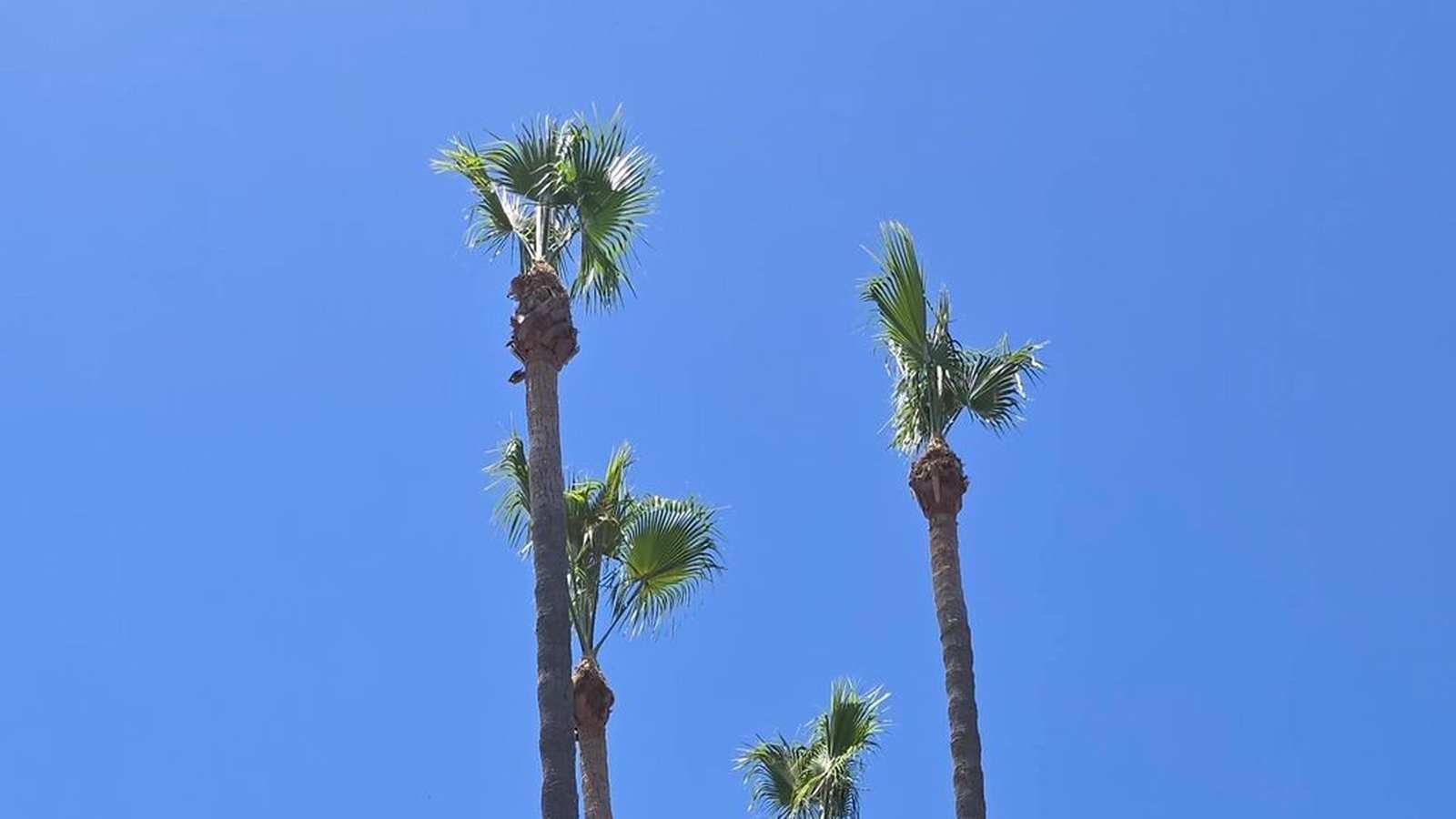
Palm Tree Trimming & Removal in Temecula Valley, CA
Fan, date, queen and other palms — skirt cleaning, frond and seed-pod removal, boot cleaning and full palm removal, including sixty-foot Washingtonias.
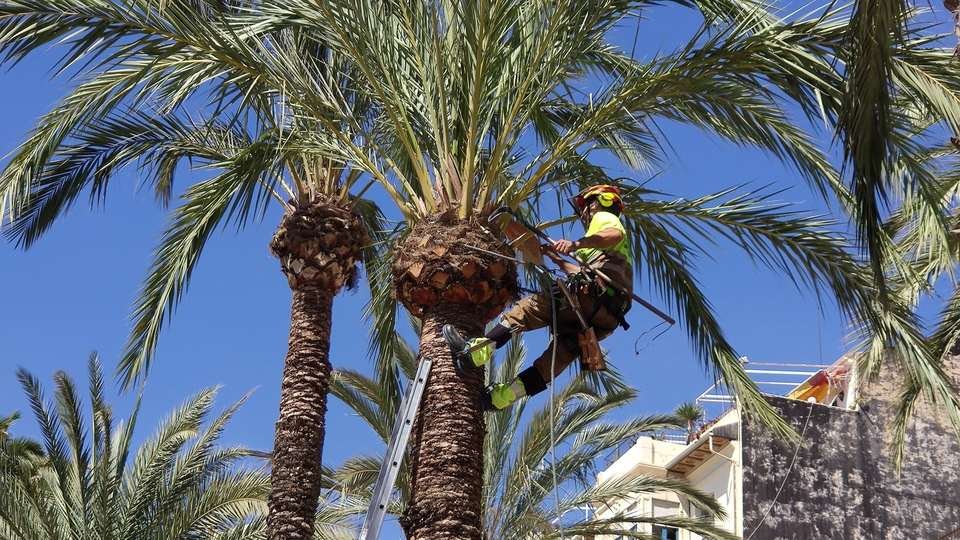
Why Palms Need Their Own Kind of Care
Palms are not trees in the botanical sense. They have no growth rings and no way to seal a wound the way a shade tree does, and they have a single growing point at the crown. Damage that point and the palm dies. That is why palm care is a different discipline from tree pruning, and why an over-eager crew can do lasting harm.
In Riverside County the most common palms are Mexican fan palm (Washingtonia robusta), California fan palm (Washingtonia filifera), Canary Island date palm, queen palm and date palm. Fan palms in particular hold on to their dead fronds, forming a heavy skirt that can reach the ground.
What a Proper Palm Trim Includes
- Skirt cleaning — removing dead and hanging fronds below the green crown
- Seed and fruit cluster removal — reducing mess, pests and volunteer seedlings
- Boot cleaning — removing old frond bases on palms where the trunk is being cleaned up
- Deadwood and hazard removal — taking out fronds that can drop onto people, cars or roofs
- Health check — looking for disease, decay and structural problems in the crown and trunk
Over-trimming palms — removing green fronds until only a small tuft remains — starves the palm and leaves it looking wrong for years. We remove dead and hanging fronds and leave the healthy crown intact.
How We Handle Palm Diseases
Some palm diseases are spread on pruning tools. Fusarium wilt, for example, affects Canary Island date palms and can be carried from tree to tree on contaminated blades. We disinfect tools between palms as standard practice. If we see signs of disease, we tell you what we see and what your options are.
Palm Skirts and Wildfire
Dry palm fronds ignite easily and burn intensely, and dry skirts are a major ember-catching hazard in fire-prone areas. Keeping palms clean is one of the simplest wildfire-safety steps for a property. See our defensible space guide.
Palm Tree Trimming and Removal Cost
| Palm height | Typical trimming range | Typical removal range |
|---|---|---|
| Under 20 ft (queen, small date) | $125–$300 | $350–$900 |
| 20–40 ft | $175–$500 | $700–$1,800 |
| 40–60 ft (fan palm) | $300–$1,150 | $1,400–$3,600 |
| 60 ft+ and hard access | $800–$1,950 | $2,900–$5,800+ |
Prices are typical Southern California ranges, not quotes. Read the full palm tree trimming cost and care guide.
The Best Time to Trim Palms
Late spring through summer, when the palm is actively growing and recovers quickly. We avoid cold snaps and nesting periods; many birds and some raptors nest in palm skirts.
Palm Removal
Palms that are dead, leaning, diseased or in the way are removed in sections, top down, with ropes and lifts as needed. Because palms have fibrous trunks, they are heavy and wet when green — rigging matters. Stump grinding can be added in the same visit.
Palm Species Guide for Southern California
| Palm | Typical size | Care notes |
|---|---|---|
| Mexican fan palm (Washingtonia robusta) | 60–100 ft, slender | Heavy dead-frond skirt; frequent trimming; tall and top-heavy in wind |
| California fan palm (Washingtonia filifera) | 40–60 ft, thick trunk | Slower growing; native; skirts protect the trunk but need fire-safe trimming |
| Canary Island date palm (Phoenix canariensis) | 40–60 ft, massive crown | Vulnerable to Fusarium wilt; sanitize tools; keep spikes off healthy palms |
| Date palm (Phoenix dactylifera) | 40–80 ft | Fruiting; annual harvest and frond management in the Coachella Valley |
| Queen palm (Syagrus romanzoffiana) | 25–50 ft, feathery | Prone to nutrient deficiencies; frizzled fronds signal manganese or potassium issues |
| Pindo (jelly) palm | 10–20 ft | Shorter, tidy; older fronds may need trimming yearly |
| Mediterranean fan palm | 8–15 ft, clumping | Low-maintenance; remove dead fronds and suckers |
Common Palm Problems and What They Mean
| Symptom | Possible cause | What to do |
|---|---|---|
| Fronds turning yellow-orange then brown, one side of crown first | Fusarium wilt (esp. Canary Island date palm) | Call for assessment; do not prune with unsanitized tools |
| Frizzled, stunted new fronds on queen palms | Manganese or potassium deficiency | Palm-specific fertilizer program; avoid removing yellowing fronds too early |
| Dark oozing at trunk or spear leaf pulling out | Bud rot or heart rot | Urgent assessment; palms with dead growing points cannot recover |
| Leaning trunk with soil heaving | Root failure | Treat as a hazard; assessment and likely removal |
| Dense, dry skirt full of rats | Neglected skirt | Professional skirt cleaning; discuss pest control |
Keep or Remove? How to Decide About a Palm
- Keep if the crown is green, the trunk is firm and straight and problems are limited to old fronds
- Treat and monitor if there are nutrient deficiency symptoms or early disease
- Remove if the growing point is dead, the trunk is soft or hollow, the palm leans after storms or it is in the way of construction
Palm Trimming by Season
| Season | Palm work | Notes |
|---|---|---|
| Late winter | Light cleanup only | Cold snaps can damage exposed growing points |
| Spring | Begin skirt cleaning and fruit-cluster removal | Check for nests before cutting |
| Summer | Main trimming season | Palms grow fastest and recover well; crews start early to avoid peak heat |
| Fall | Pre-wind-season cleanup | Remove loose fronds before Santa Ana events |
Palms, Birds and Wildlife
Palm skirts shelter owls, hawks, doves and countless small birds and bats. California law protects nests, so we inspect before cutting in spring and summer and postpone or adjust the work when we find one. If a nest is active, we will explain what we found and reschedule the affected palm.
Palm Removal Considerations
- Palms are fibrous and heavy when wet; they are removed in sections, top down
- Stumps are ground out afterwards if you plan to replant
- Palms have no regrowth from stumps, so grinding is optional if the stump is not in the way
- Green waste from diseased palms may need special handling
Palm tree trimming Across the Temecula Valley
Shai's Tree Service provides palm tree trimming throughout the Temecula Valley — Temecula, Murrieta, Wildomar, Lake Elsinore, Menifee, Canyon Lake, French Valley and Winchester — from our yard on Calle Ventura. Each part of the valley has its own trees, wind exposure, fire rules and permit requirements, so our crews plan every job around local conditions rather than a one-size checklist. If you are searching for palm tree trimming near me anywhere in the Temecula Valley, call us or send the form for a free written estimate. Choose your city below for local details.
Palm Tree Trimming & Removal: Common Questions
When should palms be trimmed?
Late spring through summer is ideal. We avoid trimming during cold weather and nesting periods.
How often do palms need trimming?
Most palms need trimming once or twice a year, depending on species and growth rate.
Can you trim very tall palms?
Yes. We use climbing gear, ropes or lifts, with a ground crew controlling the drop zone.
Why do you sanitize tools between palms?
To prevent spreading diseases like Fusarium wilt from one palm to the next.
Do you remove palm fruit clusters?
Yes, as part of a standard trim. It reduces mess and pests.
Are dead palm fronds a fire hazard?
Yes. Dry fronds catch embers and burn intensely, so keeping skirts trimmed is a simple safety step.
Do you remove palms?
Yes, from small queen palms to sixty-foot fan palms.
How much does palm trimming cost?
Typically $175–$1,150 per palm, depending mostly on height. Multiple palms in one visit cost less per palm.
Palm Tree Trimming & Removal by City in the Temecula Valley
Pick your city for local pricing notes, permit and HOA information and neighborhoods we serve. Every valley city listed has its own page.
Ready for a safer, healthier yard?
Tell us about your trees and get a free written estimate anywhere in the Temecula Valley — usually within one business day.