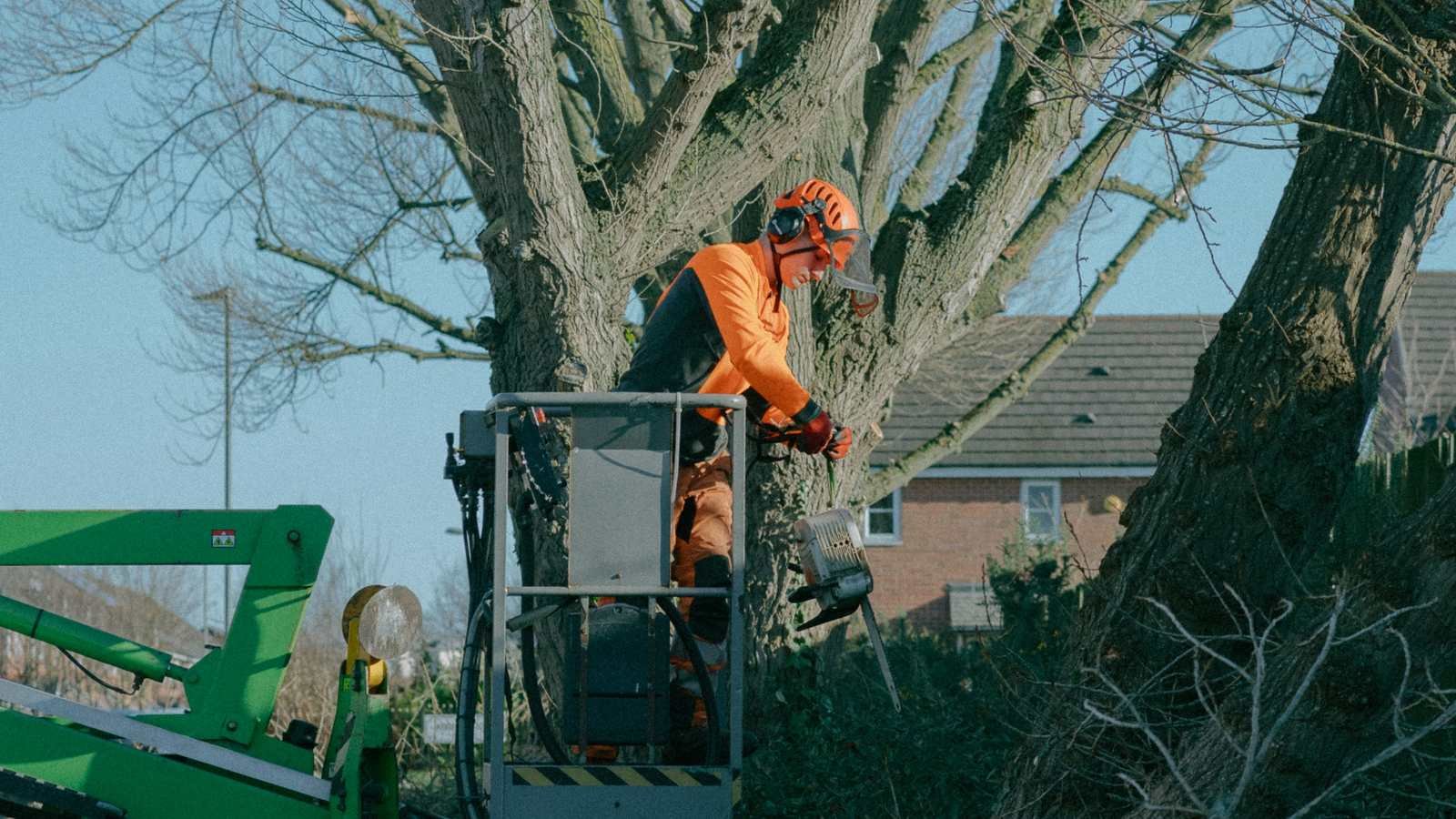
Tree Trimming in Temecula Valley, CA
Structural pruning, crown thinning, roof and line clearance and deadwood removal — done to ANSI A300 standards by crews who never top a tree.
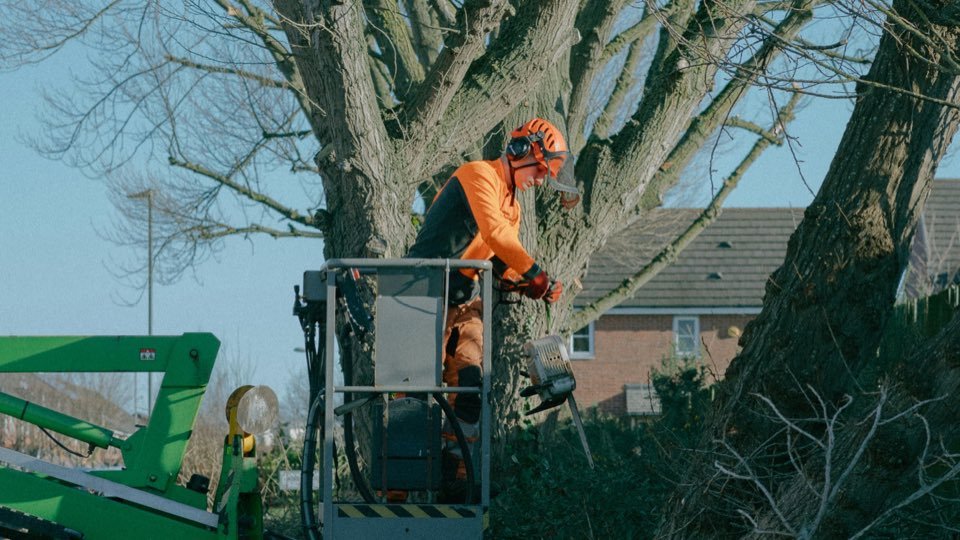
What Professional Tree Trimming Actually Involves
Tree trimming is not a haircut. Every cut removes living tissue that the tree cannot get back, so the goal of a good crew is to remove as little as possible to achieve a specific purpose: clearance from a roof, removal of dead or hazardous limbs, reduction of weight on a long limb, or opening a dense crown so wind and light pass through.
In Riverside County that purpose usually falls into one of five jobs. Clearance lifts or pulls back branches from roofs, chimneys, gutters, driveways, pools and power service drops. Deadwood removal takes out dead, dying and broken limbs before they fall. Crown thinning selectively removes interior branches to reduce wind resistance and let light through. Crown reduction shortens overly long limbs back to appropriate lateral branches. Structural pruning corrects weak unions and co-dominant stems in younger trees so they hold together as they grow.
Trimming and pruning are used almost interchangeably: shaping and clearance versus health and structure. Topping is different and harmful: cutting large limbs back to stubs. It is not an accepted practice under ANSI A300 and we do not do it — see our guide on why tree topping is a mistake.
When Does a Tree Need Trimming?
Most mature landscape trees benefit from structural pruning every three to five years. Fast-growing species like eucalyptus, pepper and ash, and trees that have been planted close to buildings, need attention more often. These are the situations that most often bring us out:
- Branches touching, rubbing or overhanging a roof, chimney, gutters or siding
- Dead, brittle or leafless limbs in an otherwise healthy canopy
- Limbs hanging over driveways, walkways, pools, play areas or neighboring property
- A dense canopy that blocks light, traps moisture against the house or hides irrigation problems
- Included bark and tight V-shaped unions where two stems compete
- Crossing branches that wound each other as they move in the wind
- Long, heavy lateral limbs that extend far beyond the trunk
- Water sprouts and suckers that crowd the interior and base of the tree
- A written notice from an HOA, city or fire authority
How Our Tree Trimming Process Works
- Walk the tree with youA crew lead inspects the trunk, structure and canopy, looks at what is underneath — roofs, fences, pools, lines — and asks what result you want. Any cavities, cracks, pests or decay change the plan.
- Write a scope you can compareYour written estimate lists which trees, what kind of pruning (clearance, thinning, deadwood, reduction) and what we will not do. That scope is what you can compare against any other bid.
- Protect the propertyWe plan the drop zone, lay protection over lawns, hardscape and pools, and set rope guards and rigging before anyone climbs.
- Prune to standardClimbers work from the inside out, making cuts at the branch collar with clean tools, removing weight from the ends rather than flat-cutting the outside, and never removing more than the tree can recover from in one visit.
- Chip, haul and cleanBrush is chipped and hauled, the work area is raked and blown clean, and chips or logs stay on site only if you ask.
- Walk it togetherWe look at the finished tree with you, explain what we did and when we would come back.
Standards We Follow: ANSI A300 and ANSI Z133
The tree industry has two written standards that matter to homeowners. ANSI A300 is the pruning standard: it defines what a proper cut is, limits the amount of live crown removed in a visit (a common guideline is roughly a quarter), and rules out practices like topping and lion-tailing. ANSI Z133 is the safety standard for tree work: climbing, rigging, chainsaw use, aerial lifts and electrical hazard rules. A company that cannot tell you which of these it follows is telling you something.
Tree Trimming Cost in the Temecula Valley
Prices below are typical Southern California ranges to help you budget. They are not a quote — height, access and hazards change the number, which is why every job gets a free written estimate.
| Tree size / situation | Typical range | What drives the price |
|---|---|---|
| Small ornamental, easy access (under 25 ft) | $175–$500 | Little climbing, no rigging |
| Medium tree, 25–50 ft | $400–$1,150 | Climbing time, haul-away volume |
| Large tree, 50–80 ft | $900–$2,300 | Rigging, crown weight, cleanup |
| Tree over a roof, pool or power drop | +20–50% | Rope work and protection |
| Multiple trees in one visit | 10–25% off per additional tree | Shared setup and cleanup |
See our full tree trimming cost guide for the Temecula Valley for a longer breakdown by species, height and access.
Trimming Trees in the Temecula Valley: What's Different Here
- Wind. Santa Ana and San Gorgonio Pass wind events load canopies hard. Thinning done well lets wind pass through instead of pushing on the whole crown. See our Santa Ana wind guide.
- Drought. Years of dry winters leave trees stressed. Stressed trees should be pruned conservatively — cutting a lot of foliage off a tree that is already struggling can push it over the edge. See drought and tree health.
- Pests. Shot hole borer has spread through Southern California, including Temecula and Riverside. Infested wood must be handled and disposed of correctly, not chipped and spread. See our shot hole borer guide.
- Fire. Limbing up trees and removing deadwood is part of defensible space. See our defensible space guide.
- Nesting birds. California law protects nesting birds and raptors; in spring and summer we check for active nests before cutting and schedule around them.
The Best Time to Trim
Late fall through winter is the easiest time for most deciduous and broadleaf trees: the tree is dormant, structure is visible and pests are less active. Palms are best trimmed in late spring and summer. Oaks are pruned lightly in the dry months. Emergency and safety work happens whenever it has to. Our month-by-month trimming calendar shows the details.
Common Trimming Mistakes We Fix
- Topping — cutting large limbs to stubs. It triggers weak, fast-growing regrowth and opens decay.
- Lion-tailing — stripping the inner branches so foliage sits only at the ends of long limbs.
- Flush cuts and stubs — cutting into the branch collar or leaving long stubs; both slow healing.
- Over-thinning — removing more than a quarter of the crown in one visit.
- Painting cuts — wound dressings do not help and can trap moisture.
Types of Tree Trimming Explained
“Trimming” covers several distinct jobs. Knowing the vocabulary helps you compare estimates and ask for exactly what your tree needs.
| Type of pruning | What it does | When it makes sense |
|---|---|---|
| Deadwood removal (cleaning) | Removes dead, dying, diseased and broken branches | Almost every mature tree; the cheapest safety upgrade |
| Crown thinning | Selectively removes interior branches to reduce density and wind resistance | Dense canopies, wind-exposed trees, trees shading roofs |
| Crown raising (lifting) | Removes lower branches to clear roofs, sidewalks, sightlines and lawns | Trees over driveways, streets and structures |
| Crown reduction | Shortens overlong limbs back to suitable side branches | Trees that outgrew their space; limbs over structures |
| Structural pruning | Establishes a strong central leader and well-spaced scaffold branches | Young trees (3–10 years); the best money you can spend on a tree |
| Restoration pruning | Corrects damage from topping or storms over several visits | Previously topped or storm-damaged trees |
| Utility clearance | Removes limbs from service lines and structures | Trees near service drops; heavier work belongs to the utility |
Species Guide: What Temecula Valley Trees Need
| Tree | Common issues here | Trimming notes |
|---|---|---|
| Coast live oak / valley oak | Heavy lateral limbs, root disease with summer water, protected status | Light pruning in the dry months; never heavy reduction; check permit rules first |
| Eucalyptus (blue gum, red gum) | Limb drop, bark shedding, wind failure, resprouting | Thin and reduce end weight; remove failing limbs early; consider removal for leaning trees |
| California sycamore | Shot hole borer, anthracnose, drought stress | Prune in winter; inspect for borer before cutting; dispose of infested wood carefully |
| Pepper tree (California and Brazilian) | Brittle wood, surface roots, limb splitting | Thin gradually; reduce long limbs; avoid heavy topping cuts |
| Olive | Dense suckering, heavy fruit crop, wind sail | Open the canopy so light passes through; remove suckers |
| Jacaranda | Messy blooms, weak unions, frost sensitivity | Structural pruning when young; prune after bloom |
| Crape myrtle | Over-pruning (“crape murder”) | Remove crossing wood and suckers; never cut to stubs |
| Pines (Aleppo, Afghan, Canary Island) | Bark beetles under drought, heavy cones, wind throw | Remove deadwood; do not over-thin; consider assessment when needles brown |
| Ficus | Aggressive roots, dense crown, heavy limbs | Regular thinning and clearance; root-management advice |
| Palms (fan, date, queen) | Dead-frond skirts, fruit clusters, disease | See our palm tree service |
Trimming Myths We Hear Every Week
- “Topping makes the tree safer.” It does the opposite: weak regrowth attaches only at the surface of the wood and breaks in wind.
- “You should always paint the cut.” Wound dressing does not prevent decay and can trap moisture. Proper cuts at the branch collar heal on their own.
- “Trees should be trimmed every year.” Most mature trees need structural pruning every three to five years; over-trimming wastes money and stresses the tree.
- “Winter is the only time to trim.” Dormant-season pruning suits many broadleaf trees, but palms, safety work and light clearance follow different clocks.
- “A tree that leans must be removed.” A long-standing lean can be stable; a sudden lean with soil heaving is an emergency. An assessment tells the difference.
- “Cheaper is fine — it's just a trim.” Unlicensed or uninsured crews expose you to liability if someone is injured or property is damaged.
Doing It Yourself vs. Hiring a Pro
Small, low branches you can reach from the ground with hand pruners or a pole saw are fine for a homeowner. Once a job needs a ladder, a chainsaw above shoulder height, or work near a roof or power line, it becomes one of the most dangerous home projects there is. Falls from ladders and chainsaw injuries account for many tree-work emergencies each year.
- Safe to DIY: deadheading, pruning shrubs, cutting branches under about two inches from the ground
- Call a pro: anything over a roof, near lines, above head height, or thicker than the width of your wrist
- Never DIY: trees touching power lines, storm-damaged limbs under tension, and any tree that leans or hangs
A Pre-Storm and Pre-Fire-Season Checklist
- Walk the property in late summer and mark dead, hanging or cracked limbs.
- Have deadwood removed and dense canopies thinned before wind season.
- Raise low branches so they cannot ladder fire from grass into the canopy.
- Keep branches at least 10 feet from chimneys and clear of roofs.
- Check anchor points: lean, soil heaving, fungus and cavities at the base.
- Book an assessment for any tree you are unsure about.
What a Good Trimming Estimate Should Say
- Every tree by species and location, so nothing is vague
- The type of pruning — thinning, raising, reduction, deadwood — in plain words
- What is not included (for example stump grinding, permits)
- Whether wood, chips and debris are hauled or left
- License number and proof of insurance
- The date, crew size and total price
Trimming Glossary
- Branch collar — the swollen ring where a branch meets the trunk; cuts are made just outside it.
- Leader — the dominant upright stem that forms the main axis of the tree.
- Included bark — bark trapped between two stems, a weak union prone to splitting.
- Ladder fuel — low branches and shrubs that let a ground fire climb into a canopy.
- Drop zone — the area where cut limbs land, cleared and protected before cutting.
- Lion-tailing — stripping inner branches so foliage sits only at the tips; harmful.
Tree trimming Across the Temecula Valley
Shai's Tree Service provides tree trimming throughout the Temecula Valley — Temecula, Murrieta, Wildomar, Lake Elsinore, Menifee, Canyon Lake, French Valley and Winchester — from our yard on Calle Ventura. Each part of the valley has its own trees, wind exposure, fire rules and permit requirements, so our crews plan every job around local conditions rather than a one-size checklist. If you are searching for tree trimming near me anywhere in the Temecula Valley, call us or send the form for a free written estimate. Choose your city below for local details.
Tree Trimming: Common Questions
How often should I trim my trees?
Most mature landscape trees benefit from structural pruning every three to five years. Fast growers, palms and trees close to roofs may need attention every one to two years.
Is it better to trim in winter or summer?
For most broadleaf trees, late fall through winter is ideal. Palms do best in late spring and summer. Oaks are pruned lightly in the dry season. Safety work is done any time.
What is the difference between trimming and topping?
Trimming removes specific branches for a purpose. Topping cuts large limbs back to stubs, which weakens the tree and is not an accepted practice. We never top trees.
Will you trim trees near power lines?
We can prune around service drops on your property, but any branch within the utility's clearance zone must be handled by the utility or a certified line-clearance contractor.
Do I need a permit to trim a tree?
Usually not for ordinary pruning of a landscape tree. Native oaks, street trees and other protected trees can be regulated. We check before quoting.
How much does tree trimming cost?
Typically $350–$1,550 per tree in the Temecula Valley, depending on height, access and how much needs to come out. Get a free written estimate for an exact price.
Do you haul away the branches?
Yes. Cleanup and haul-away is included. We can leave wood chips or logs on site if you want them.
Can trimming save a diseased tree?
Sometimes. Removing infected or dead wood can help, but some conditions cannot be pruned away. We will tell you honestly which is which.
Tree Trimming by City in the Temecula Valley
Pick your city for local pricing notes, permit and HOA information and neighborhoods we serve. Every valley city listed has its own page.
Ready for a safer, healthier yard?
Tell us about your trees and get a free written estimate anywhere in the Temecula Valley — usually within one business day.